Jean Larson - May 25, 2009

In the middle of May, the rains returned. The grass is greening up and growing fast, ready for mowing. The retention ponds have held water overnight. The Virginia sweetspire (
Itea virginica) that lives at the south end of the front retention basin is

blooming. The nearby royal fern (
Osmunda regalis) is taking inundation in its stride. At the north end, the sedge has finally bloomed and been identified as the native
Carex comosa. (I was worried it might be another exotic invasive.) A new redbud has been planted to remember Marylynn Hall near the bird bath.
I bought some Fakahatchee grass (
Tripsacum dactyloides) to plant on the slope of the back retention basin near the driveway. We currently have four plants in with more to come in August. This grass has long roots to hold the soil in place and has done well in on the side of the ditch near Shir Shalom, where it is periodically washed with flowing water carrying leaves and branches (and air potatoes and trash) from the upper watershed onto our property. We fluff the debris out of that grass out now and again, and do not need to think about thinning or dividing or pruning it back, since nature does it for us. Bill transplanted to this area some of the witch grass (Dichanthelium species) upstream of the old meeting for worship in nature area and I put in two more river oats downstream. They are showing the effects of the downpours we have had, but based on how well the other river oats have done, we are expecting them all to settle in even if it takes a year or so for them to be secure in their new locations.
In preparation for summer mowing, I am working to simplify the boundary between mow and no-mow zones. On the west edge of the back retention basin, the wire fencing that discourages the armadillos from uprooting some native ferns has been joined with the one protecting a wild olive (
Osmanthus americanus), a coral bean (
Erythrina herbaccea), and two swamp hibiscus also known as scarlet rosemallow (
Hibiscus coccineus) that were planted last year and may not be big enough to bloom until next year. It has been extended to include the sweet bay magnolia (Magnolia virginiana), whose vicinity includes the partridge pea plants (
Chamacrista fasculata) bought at the native plant sale that are very happy to be in the ground, some softhair cone flower (
Rudbeckia mollis), and a yellow top (
Flaveria linearis). On the northside of the back retention pond I sprinkled some wildflower seeds that have been in my refrigerator too long, and I am now looking to see if they will come up.


Bill noticed a plant growing in profusion in the back retention basin and asked if it were Mexican petunia, an exotic invasive. I said no, but when it finally bloomed with a small clover-like flower, I looked for it, and discovered it was alligator weed, which is on the state of Florida list of noxious weeds. It is somewhat similar to the native
Ludwigia (primerosewillow) which is growing in the same basin.

When I walk from the back retention basin into the woods, I often go under the hophornbeam (Ostrya virginiana) which has been blooming so nicely this month. I go back to the creek near where the ditch runs into it to see if the water is running (it is today), and then head along the floodway, passing the marsh dogwood (Cornus foemina) that has finally finished blooming.

Then I enjoy the open space where we used to meet for worship and continue through the cut in the tree that came down after Hurricane Fay came through. The trunk is rotting nicely, now in chunks that
 flower. About 1/2 inch in diameter")
slough one way and another in the floods that pass through. After the roots are reached I am nearly at the grandfather oak at the edge of the pond. In one section near the pond, the common yellow stargrass (Hypoxis curtissii) carpets the path, blooming only during the day.
After a walk in the woods it is nice to notice the pea flowers appearing in the children's vegetable garden and to come inside for a drink of water and a quick look out the back window where the seven sisters roses donated by Bart are blooming so prettily.

 In the middle of May, the rains returned. The grass is greening up and growing fast, ready for mowing. The retention ponds have held water overnight. The Virginia sweetspire (Itea virginica) that lives at the south end of the front retention basin is
  blooming. The nearby royal fern (Osmunda regalis) is taking inundation in its stride. At the north end, the sedge has finally bloomed and been identified as the native Carex comosa. (I was worried it might be another exotic invasive.) A new redbud has been planted to remember Marylynn Hall near the bird bath.
I bought some Fakahatchee grass (Tripsacum dactyloides) to plant on the slope of the back retention basin near the driveway. We currently have four plants in with more to come in August. This grass has long roots to hold the soil in place and has done well in on the side of the ditch near Shir Shalom, where it is periodically washed with flowing water carrying leaves and branches (and air potatoes and trash) from the upper watershed onto our property. We fluff the debris out of that grass out now and again, and do not need to think about thinning or dividing or pruning it back, since nature does it for us. Bill transplanted to this area some of the witch grass (Dichanthelium species) upstream of the old meeting for worship in nature area and I put in two more river oats downstream. They are showing the effects of the downpours we have had, but based on how well the other river oats have done, we are expecting them all to settle in even if it takes a year or so for them to be secure in their new locations.
In preparation for summer mowing, I am working to simplify the boundary between mow and no-mow zones. On the west edge of the back retention basin, the wire fencing that discourages the armadillos from uprooting some native ferns has been joined with the one protecting a wild olive (Osmanthus americanus), a coral bean (Erythrina herbaccea), and two swamp hibiscus also known as scarlet rosemallow (Hibiscus coccineus) that were planted last year and may not be big enough to bloom until next year. It has been extended to include the sweet bay magnolia (Magnolia virginiana), whose vicinity includes the partridge pea plants (Chamacrista fasculata) bought at the native plant sale that are very happy to be in the ground, some softhair cone flower (Rudbeckia mollis), and a yellow top (Flaveria linearis). On the northside of the back retention pond I sprinkled some wildflower seeds that have been in my refrigerator too long, and I am now looking to see if they will come up.
blooming. The nearby royal fern (Osmunda regalis) is taking inundation in its stride. At the north end, the sedge has finally bloomed and been identified as the native Carex comosa. (I was worried it might be another exotic invasive.) A new redbud has been planted to remember Marylynn Hall near the bird bath.
I bought some Fakahatchee grass (Tripsacum dactyloides) to plant on the slope of the back retention basin near the driveway. We currently have four plants in with more to come in August. This grass has long roots to hold the soil in place and has done well in on the side of the ditch near Shir Shalom, where it is periodically washed with flowing water carrying leaves and branches (and air potatoes and trash) from the upper watershed onto our property. We fluff the debris out of that grass out now and again, and do not need to think about thinning or dividing or pruning it back, since nature does it for us. Bill transplanted to this area some of the witch grass (Dichanthelium species) upstream of the old meeting for worship in nature area and I put in two more river oats downstream. They are showing the effects of the downpours we have had, but based on how well the other river oats have done, we are expecting them all to settle in even if it takes a year or so for them to be secure in their new locations.
In preparation for summer mowing, I am working to simplify the boundary between mow and no-mow zones. On the west edge of the back retention basin, the wire fencing that discourages the armadillos from uprooting some native ferns has been joined with the one protecting a wild olive (Osmanthus americanus), a coral bean (Erythrina herbaccea), and two swamp hibiscus also known as scarlet rosemallow (Hibiscus coccineus) that were planted last year and may not be big enough to bloom until next year. It has been extended to include the sweet bay magnolia (Magnolia virginiana), whose vicinity includes the partridge pea plants (Chamacrista fasculata) bought at the native plant sale that are very happy to be in the ground, some softhair cone flower (Rudbeckia mollis), and a yellow top (Flaveria linearis). On the northside of the back retention pond I sprinkled some wildflower seeds that have been in my refrigerator too long, and I am now looking to see if they will come up.

 Bill noticed a plant growing in profusion in the back retention basin and asked if it were Mexican petunia, an exotic invasive. I said no, but when it finally bloomed with a small clover-like flower, I looked for it, and discovered it was alligator weed, which is on the state of Florida list of noxious weeds. It is somewhat similar to the native Ludwigia (primerosewillow) which is growing in the same basin.
 When I walk from the back retention basin into the woods, I often go under the hophornbeam (Ostrya virginiana) which has been blooming so nicely this month. I go back to the creek near where the ditch runs into it to see if the water is running (it is today), and then head along the floodway, passing the marsh dogwood (Cornus foemina) that has finally finished blooming.
 Then I enjoy the open space where we used to meet for worship and continue through the cut in the tree that came down after Hurricane Fay came through. The trunk is rotting nicely, now in chunks that
  slough one way and another in the floods that pass through. After the roots are reached I am nearly at the grandfather oak at the edge of the pond. In one section near the pond, the common yellow stargrass (Hypoxis curtissii) carpets the path, blooming only during the day.
After a walk in the woods it is nice to notice the pea flowers appearing in the children's vegetable garden and to come inside for a drink of water and a quick look out the back window where the seven sisters roses donated by Bart are blooming so prettily.
slough one way and another in the floods that pass through. After the roots are reached I am nearly at the grandfather oak at the edge of the pond. In one section near the pond, the common yellow stargrass (Hypoxis curtissii) carpets the path, blooming only during the day.
After a walk in the woods it is nice to notice the pea flowers appearing in the children's vegetable garden and to come inside for a drink of water and a quick look out the back window where the seven sisters roses donated by Bart are blooming so prettily.


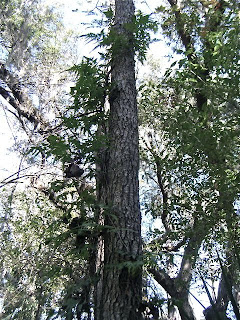
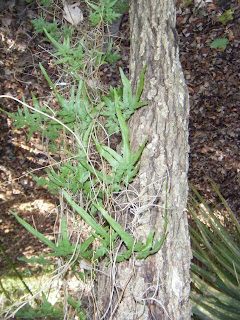
 Another invasive is Coral ardisia (


